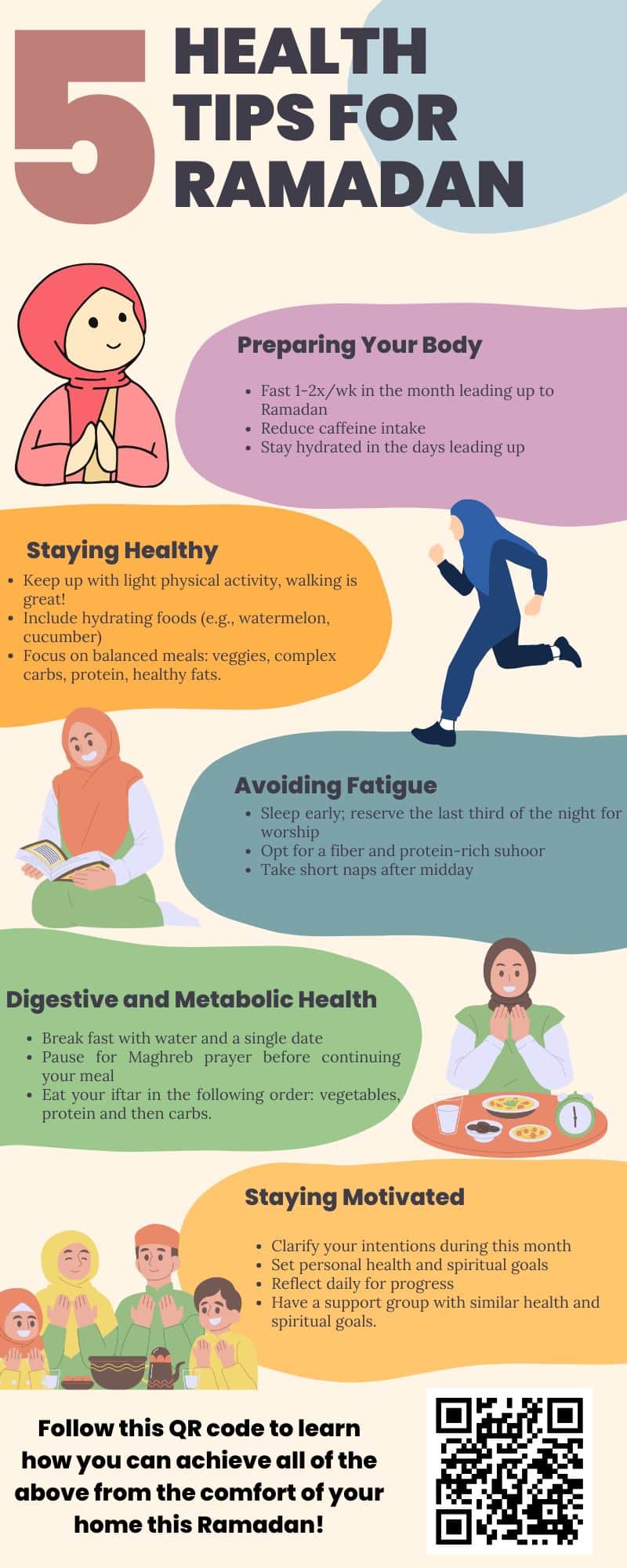
Ramadan is a time of spiritual growth, fasting, and mindful reflection. However, it’s essential to support your physical health so that you can make the most of the holy month.
These health tips for Ramadan are designed to keep you nourished, energized, and focused. For those looking for additional support, consider our comprehensive Ramadan Health Program to help you thrive this month.
Preparing Your Body: Key Health Tips for Ramadan
Preparation is key to a smoother fasting experience. Start getting ready in the following ways:
- Shift Your Meal Times: Adjusting your meals gradually to match suhoor (pre-dawn) and iftar (sunset) times can help ease your body into the Ramadan schedule.
- Reduce Caffeine and Sugar: Cutting down on these stimulants before Ramadan can prevent withdrawal symptoms like headaches and irritability, making the first few days of fasting easier.
- Increase Water Intake: Hydrating now will help you prepare for fasting. Start drinking more water and consider our health tips for Ramadan below on staying hydrated during the holy month.
Maintaining Health During Ramadan: Nutritional Health Tips for Ramadan
Once Ramadan begins, a balanced approach to meals and hydration will keep you healthy and energized.
- Eat Hydrating Foods: Along with water, hydrating foods like watermelon, cucumbers, tomatoes, and oranges provide extra hydration. These are especially helpful for suhoor to help sustain you throughout the fasting hours.
- Focus on Balanced Meals: Choose nutrient-dense foods for suhoor and iftar to support energy. Lean proteins, complex carbs like whole grains, and healthy fats, such as avocados and nuts, are all essential.
- Limit Sugary and Fried Foods: Though traditional treats are tempting, avoiding excessive sugar and fried foods is a valuable health tip for Ramadan that can help you avoid energy crashes and digestive discomfort.
Avoiding Fatigue: Effective Health Tips for Ramadan
Fatigue is a common challenge during fasting, but the right strategies can help:
- Optimize Your Suhoor Meal: Include complex carbs, lean protein, and healthy fats to keep you feeling fuller longer and sustain your energy levels. Download the Suhoor Guide Recipe ebook
- Take Short Naps: A 20- to 30-minute nap during the day, ideally after Dhuhr prayer, can help reduce fatigue without interrupting your nighttime sleep.
- Exercise Lightly: Light physical activities, like walking or stretching after iftar, keep you active without causing exhaustion.
Prioritize Sleep with a Thoughtful Schedule
Balancing worship with sleep can be challenging during Ramadan, but a structured sleep schedule can help:
- Plan for the First 2/3 of the Night: Aim to sleep during the first two-thirds of the night, as this timing supports more restorative deep sleep. In the last third of the night, prioritize worship, including suhoor and prayers, to keep your schedule aligned with your spiritual goals while still promoting rest.
- Limit Screen Time Before Bed: Avoid screens before sleep, as blue light interferes with melatonin production, making it harder to fall asleep. Reading Quran or praying taraweeh are more restful alternatives.
Preventing Digestive Issues with Health Tips for Ramadan
Fasting can sometimes lead to digestive discomfort, but these strategies help:
- Break Your Fast Gradually: Begin with water and a single date, a nutrient-dense and gentle option to start with. Then, pause for Maghreb prayer before continuing your meal, which helps you control portions and avoid overeating. Learn more here about creating a nutritionally optimal iftar.
- Avoid Carbonated Drinks: Carbonated beverages can cause bloating and discomfort, so stick to water and herbal teas for hydration.
- Incorporate Probiotics: Foods like yogurt, kefir, and pickled vegetables help maintain healthy gut bacteria and support digestion during fasting.
Staying Motivated and Focused: Mindful Health Tips for Ramadan
Staying motivated throughout Ramadan is important. Here’s how to stay committed:
- Set Health and Spiritual Goals: Write down achievable health and spiritual goals, such as reading a set amount of the Quran or creating a healthy iftar meal.
- Reflect Daily: Reflecting on your personal growth each day will help keep you grounded, inspired, and motivated.
- Stay Connected: Lean on friends, family, or a Ramadan health program for support. For additional social support, join our Ramadan Health Program for the full benefit of having Muslim Registered Dietitians behind you along with a community of Muslim women with shared health goals and values.
Conclusion
Ramadan is a rewarding experience, and a mindful approach to health allows you to focus on its spiritual benefits. By preparing your body, eating well, managing sleep, and hydrating, these health tips for Ramadan will help you stay energized and spiritually fulfilled throughout the month. Explore our Ramadan Health Program for a complete guide to making the most of this holy month.